
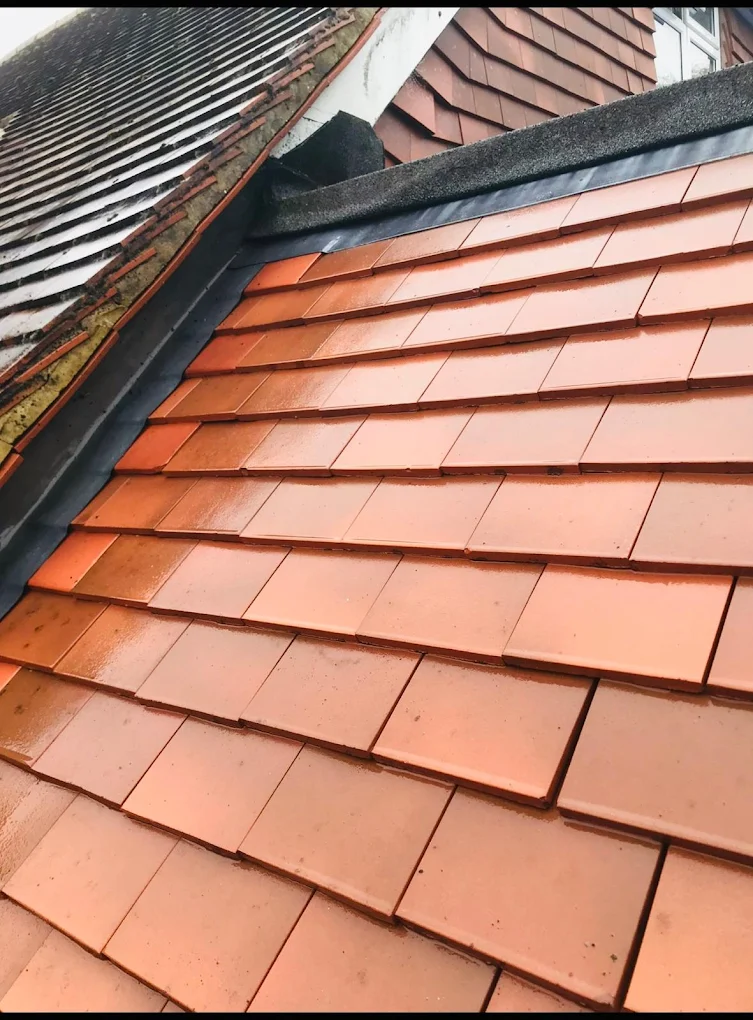
Lead Flashing
Bossed, not cut from strip. Watertight first time.
Lead is the oldest roofing detail still in use because nothing has come along to replace it. Done right, it outlasts everything around it. Done wrong, every storm is a gamble.
- Stepped flashings cut into brick joints
- Soakers under every course at abutments
- Lead dressed and bossed to shape on site
How we do this job properly.
Where lead belongs
Around chimney stacks, where a roof meets a wall, around dormers, behind parapets, and at valleys on heritage buildings. Anywhere water runs off one surface and has to be carried across or away from another.
How we work it
Lead is bossed to shape, not cut from strip and stuck down. Stepped cuts get raked into the mortar joint, not scored across the brick face. Soakers go under every course at a side abutment. Fixings are copper clout or lead wedges, not mastic.
Codes and sizes
Code 4 for most domestic flashings. Code 5 where the length of lead is greater or the exposure is higher. Expansion gaps allowed for on anything longer than 1.5 metres because lead moves with heat.
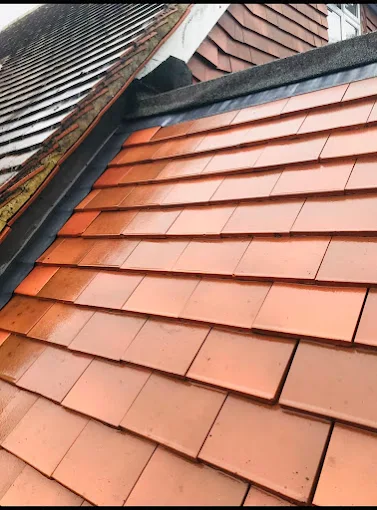
Before you call, the quick answers.
How long should lead flashing last?
A long time when it's installed correctly to start with. The mortar pointing around it usually needs attention first.
Can you just re-seal old lead?
Sometimes, if the lead is sound and only the pointing has failed. Other times the lead itself has had its day and needs replacing. We'll tell you honestly after we've had a proper look.
What happens if someone's used mortar instead of lead?
It cracks, it lets water in, and it needs doing properly. We fit lead as it should have been done first time.
Leak? Storm damage? Request a Quote today
Call the direct line for the fastest answer or request a quote.
We'll get back to you as soon as possible.
- Fully insured
- Free quotes
- 40+ years experience
- Local team